Described as “legendary” by The New Yorker and as having “something approaching rock star status” by The New York Times Magazine, Joan C. Williams is a scholar of social inequality and Distinguished Professor of Law (Emerita) at the University of California Law San Francisco. Her 12 books have been translated into French, Japanese, Korean, Hungarian and Danish. She has published academic work in law, sociology, social psychology and management journals.
Williams’ influential work on class includes Outclassed: How the Left Lost the Working Class and How to Win Them Back (2025), nominated for the Financial Times’ Best Business Book of the Year, White Working Class (2017), and her 2016 Harvard Business Review article, “What So Many People Don’t Get About the U.S. Working Class,” which garnered 3.7 million views. She has published on class dynamics in American politics in The New York Times, Washington Post, The Atlantic, The New Republic, Politico, The Hill, The Wall Street Journal and elsewhere. With Jared Abbott of the Center for Working Class Politics, she is co-author of two forthcoming reports, “The Left’s Coalition Crisis: Understanding the Massive Divide Between Working Class and College Educated Voters, and How to Bridge It” and “The Working Class Win-o-meter: Dialing Up to Victory.”
Williams pioneered the legal theories and social science US women use to counter job discrimination based on motherhood. Her 2003 law review article was prominently cited in the landmark 2004 case that held that discrimination based on motherhood was sex discrimination and her theories were adopted by the Equal Employment Opportunity Commission in Guidance published in 2007 and 2012.
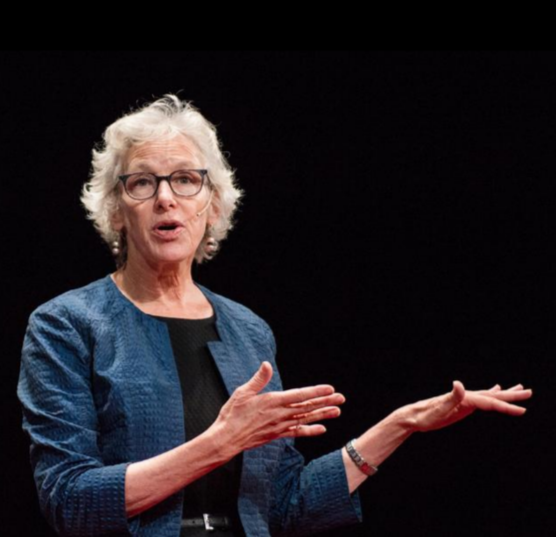
By 2010 “family responsibilities discrimination” (a term she coined) was one of the fastest-growing arenas of anti-discrimination law. Her 2006 report “Out or Pushed Out: The Real Story of Women and Work,” set the frame later used to cover the COVID pandemic: that mothers weren’t choosing to drop out in pursuit of changed priorities—they were being pushed out by hostile workplaces. She was also a co-Principal Investigator in the Gap Stable Scheduling Study, which shifted hourly workers to more stable schedules, and found that Gap’s sales and labor productivity increased as a result.
Williams is also well-known both in the U.S. and abroad for her work on diversity, equity and inclusion (DEI). Her TED talk, Why corporate diversity programs fail — and how small tweaks can have big impact, has over 1.3 million views In 2012, she launched “bias interrupters,” a data-driven approach to interrupting bias in organizations whose webpage has accessed over 650,000 times. Her team has published eight studies documenting how racial and gender bias play out in today’s workplaces, with two focused specifically on the experience of women of color.